Logo for Madera Unified Logo for Maderausd.org

Gang Intervention

Gang Intervention

The City of Madera has experienced challenges related to gang involvement since the 1980s. Recognizing that enforcement alone would not resolve the issue, the Madera Unified School District (MUSD), in partnership with local law enforcement agencies, made a strategic decision to focus on prevention and early intervention. Their shared goal was to identify students at risk of gang involvement and provide education on the consequences and long-term impact of gang affiliation.
gang-prevention
In 2001, due to the scope and complexity of the issue, MUSD established the Gang Intervention Specialist Program. This initiative fostered strong collaboration among school officials, law enforcement, and community-based organizations. Through direct engagement with students and parents, and a coordinated, unified response, the District experienced record-low levels of gang involvement.
However, during the COVID-19 pandemic, limited in-person interaction significantly reduced opportunities for early intervention and mentorship. As a result, MUSD observed an increase in gang involvement, association, and membership among students.

In 2023, at the request of the School Board, the Gang Intervention Program was reinstated. Hector Garibay, a former law enforcement officer with the Madera Police Department, was hired to lead these renewed efforts. Upon evaluation, it became clear that the original intervention models no longer fully addressed the evolving challenges facing today’s student population. In response, the Enhanced Gang Intervention Program was developed to better meet current needs.
In 2024, MUSD expanded its collaborative approach by partnering with the Madera County District Attorney’s Office, Madera County Sheriff’s Department, Madera Police Department, Madera County Probation Department, Madera County Behavioral Health Services, and Camarena Health to formally establish the Gang Collaborative. This multi-agency initiative was designed to address the growth and recruitment of criminal street gangs within the District through a coordinated prevention and intervention framework.

The Gang Collaborative emphasizes early prevention, particularly among younger students, while maintaining structured intervention strategies for those already at risk. By aligning educational leadership, law enforcement, mental health services, and community health resources, MUSD and its partners have reinforced their shared commitment to safeguarding students and strengthening the Madera community through proactive, comprehensive gang prevention efforts

Prevention Strategies

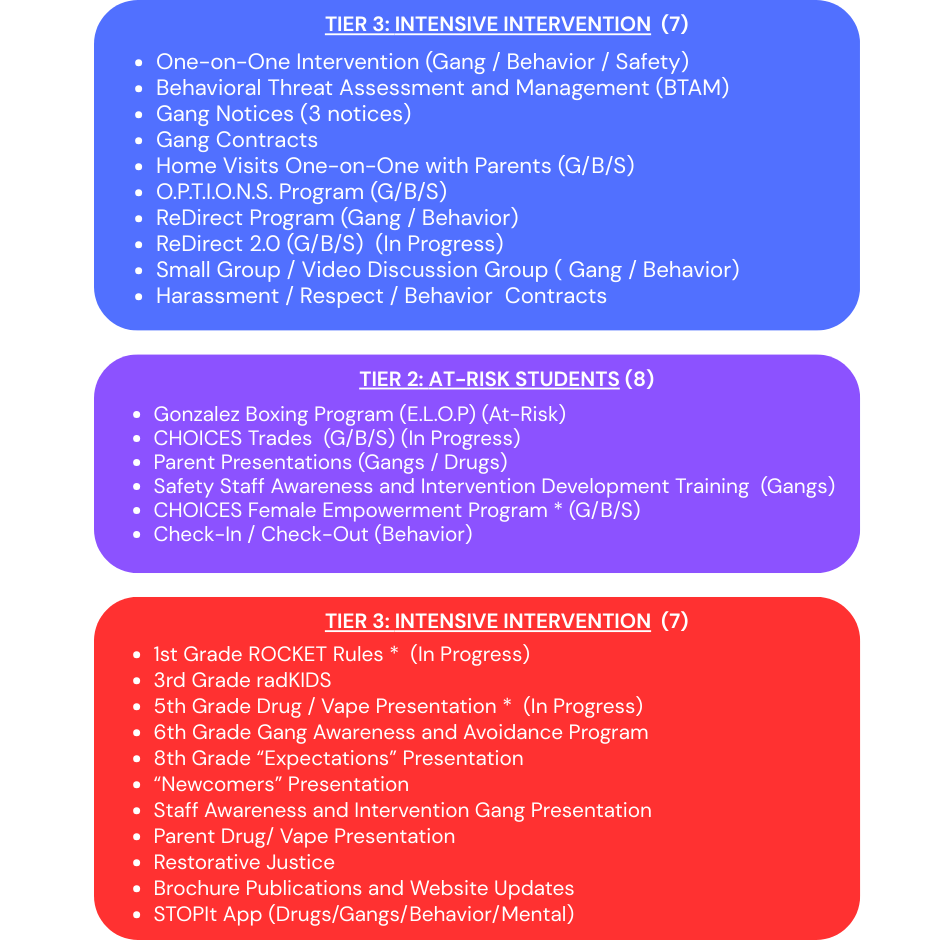
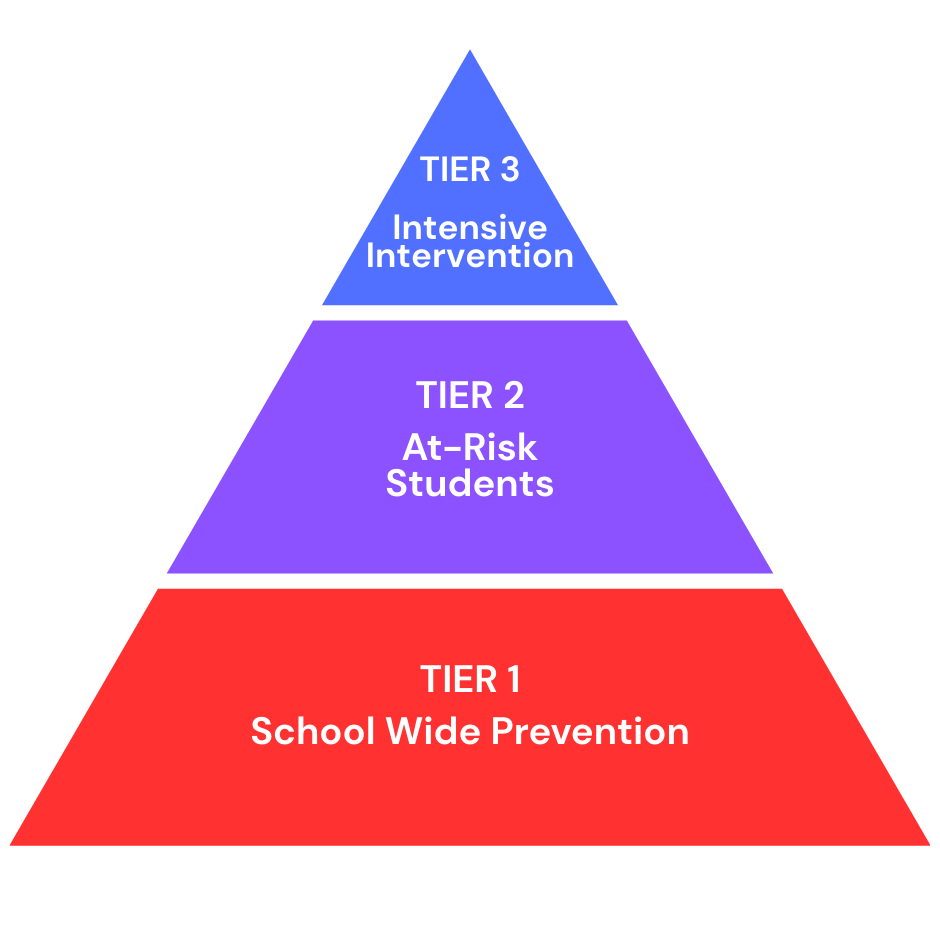
MUSD Enhanced Gang Intervention is a three-tiered approach;
Tier 1: Education
Tier I, focusing heavily on school-wide core features which are in place within the MUSD and are available to all students of the 3rd Grade, 5th Grade and 6th Grade respectively. The majority of students have historically responded positively to these systems and practices. However, a smaller group of students have required some additional interventions and support to address either externalizing or internalizing behaviors consistent with gang affiliation.
Tier 2: Documentation
Tier II, interventions are an opportunity to provide additional structure, specific to the needs of these identified students and provide them opportunities to learn and practice skills, and receive more frequent feedback related to specific social-emotional-behavioral areas of need.
Tier 3: Enforcement
Tier III, individualized interventions are intensive and customized support for specific students who have not appeared to have changed their behavior from Tier 1 and Tier II intervention strategies
tiers squares
tiers pyramid

Our Programs

rad-kids

RadKIDS

Explore

O.P.T.I.O.N.S

Explore
gonzales_boxing

Gonzales Boxing

Explore

ReDIRECT

Explore

Identifying The Problem

Gang membership has been around since the beginning of our country and through the expansion of the country, the gang population and influence has moved from the East Coast to the West Coast, from large cities to small cities and everywhere in between.

With the lower housing prices, a smaller police force to conduct gang suppression, an agricultural boom with job opportunities, gang influence was observed on the streets of Madera. By the 1980s- late 1980s, the City of Madera, stemming from these demographic changes in the population, the Madera Unified School District also observed a change in their own demographics, gangs began to show up on the school campuses.

A stronghold of gang influence stemming a large part from drug activity was seen in the early 1990’s. Violent criminal activity continued to be seen in the district and the city of Madera since the 1990’s and continues to today. Different links below indicate the continued violence;
The annual struggle to combat the clothing influence, movie industry influence, music industry influence and currently the social media influence; cellphones in the hands of elementary age students as early as 8 years old, school administrators don’t have the time, counter-influence or ability to keep up with the every-growing pressures onto a young person without additional targeted support.

Gang Membership

The Safety Department will be diligent in its efforts to discourage gang membership, gang association and prevention of gang crimes on school campuses. A gang is defined as:
• three or more persons who have a common identifying name, sign or symbol
• engages in criminal activities as one of its primary activities, AND
• engaged in a pattern of criminal activity, either alone or together.
Public Hearings regarding the Local Control Accountability Plan (LCAP), Budget Overview for Parents and the Proposed Budget for the Madera Unified School District will be held before the governing board of the district at Madera Unified School District Board Room, 1902 Howard Road, Madera CA 93637 on June 9, 2026 at 6:00 pm. The proposed budget will be available for inspection at the district office, 1902 Howard Road, Madera CA 93637 on June 4, 2026. Any member of the public may appear and be heard concerning the Local Control Accountability Plan and any resident of the district may object to the proposed budget or any item in the budget.